New resource for youth workers to tackle county lines
published on 16 Jul 2026
The Salvation Army has launched a new, practical resource, Way In, Way Out, to help its youth workers - and others supporting young people - have meaningful, preventative conversations about county lines, exploitation and personal safety. The resource offers practical tools to help young people stay safe and, where needed, find a pathway out of exploitation.
Developed from frontline experience by The Salvation Army’s Street-Based Youth Work Network, alongside its Children & Youth and Anti-Trafficking and Modern Slavery teams, the resource responds to growing concerns about young people in communities across the UK being targeted by criminal gangs.

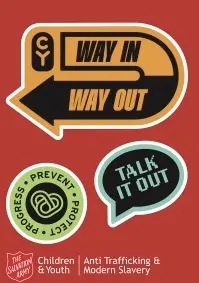
Designed for young people aged 12–17, Way In, Way Out uses conversation-based cards to support practical, preventative discussions about exploitation, risk and personal safety. Developed for real-world, street-based settings, it helps youth workers open dialogue and build trust Way In, Way Out is being rolled out to Salvation Army youth work teams.
More than a resource, it is part of a wider response - equipping youth workers to strengthen relationships and support young people to find a “way out” of exploitation.
Shaped by street-based youth workers, this initiative responds to a clear need for tools to start difficult conversations. It has been piloted in four UK locations and refined with input from The Salvation Army’s Addictions and Safeguarding specialists.
Matt Perkins, Youth Specialist (Leader Development) said:
“Young people are navigating increasingly complex risks, and too often they are being targeted where they live and spend time. Way In, Way Out equips street-based youth workers to engage directly in those spaces, prioritising conversations that build trust, open honest dialogue, and help prevent harm before it happens. At its heart, this is about listening well, building meaningful relationships, and being a consistent, trusted presence in young people’s lives”.
The Salvation Army is uniquely placed to respond to exploitation in all its forms. As holders of the government’s Modern Slavery Victim Care Contract, it supports all adult survivors of modern slavery in England and Wales, many of whom have been tricked, threatened and coerced into criminal exploitation. Combined with its presence in communities across the UK, a national network of youth workers - including those working directly on the streets - and more than 150 years of experience supporting vulnerable people with compassion and care, The Salvation Army brings both the insight and infrastructure needed to make a lasting difference.

This resource draws directly on frontline experience to help spot the warning signs early and open up conversations that can lead to safety and, ultimately, a way out of exploitation, where life-changing support is available to help people rebuild their lives
Kathy Betteridge, Director of Anti-Trafficking and Modern Slavery for The Salvation Army, said:
“Through our work supporting survivors, we see the reality of exploitation and the profound impact it has on young lives. Prevention is vital. This resource draws directly on frontline experience to help spot the warning signs early and open up conversations that can lead to safety and, ultimately, a way out of exploitation, where life-changing support is available to help people rebuild their lives.”
The launch is supported by dedicated training sessions, open to Salvation Army youth workers, volunteers and practitioners across sectors. The sessions, with input from The Salvation Army’s Addictions unit, explore the realities of county lines and the exploitation of young people and equip attendees to use the Way In, Way Out resource in practice.
Detached Youth Worker Salvation Army, Gemma Donaldson from Fife, said: “As a detached youth worker, this resource fits so naturally into what we do. It helps us build on the trust we already have and gently guide conversations around safety, risk, and support in a way that feels safe for young people.”
“Way In, Way Out gives a structure to conversations that can otherwise feel difficult to navigate. It equips us to raise awareness around county lines & exploitation and help young people identify safe people and safe spaces.” said Detached youth worker Ruth Beattie Salvation Army, from Norwich

One young person who was supported out of county lines exploitation by The Salvation Army said:
“When the police got in touch with The Salvation Army, they helped me get a place far, far away from everything that had happened. If they hadn’t done that, I think I would be dead by now or at least in jail or because things were just getting worse and worse. People need to understand that you should ask for help, because it is there and you should trust the police and The Salvation Army.”
The launch is supported by dedicated training sessions, open to Salvation Army youth workers, volunteers and practitioners across sectors. The sessions, with input from The Salvation Army’s Addictions unit, explore the realities of county lines and the exploitation of young people and equip attendees to use the Way In, Way Out resource in practice.