More than 1.8 million UK adults forced to be alone on Christmas Day
published on 19 Dec 2025
An estimated 1.8 million UK adults will spend Christmas Day alone even though they don’t want to. That’s equal to the combined total populations of Birmingham and Glasgow*.
The findings come from a new Salvation Army survey** commissioned to highlight that there are people who are living, and in some cases dying, in social isolation.
The church and charity warns that meaningful human contact is crucial for people’s wellbeing, and overall life chances and that social isolation should be seen just as much a measure of a thriving society as the health and wealth levels of its population. The nationally representative survey of 4384 UK adults also revealed that nearly one in twelve have at some point gone more than a month without a face-to-face conversation with another adult, not including a quick exchange with a stranger.
The Salvation Army’s social isolation lead, Andrew Wileman, said: “These findings are much more serious than just missing out on festive fun. Connection is a basic human need. Isolation is the main reason people give for turning to The Salvation Army for help and the need for belonging is especially strong at Christmas. We often find that a cup of tea and a chat with someone at The Salvation Army is the only meaningful conversation some people have all week.
“And social isolation isn’t just about people feeling lonely; it’s about people being invisible and missing out on the support many of us take for granted. Whether that’s someone unable to leave their house due to a disability, someone who has shut themselves away because unemployment has led to depression or someone forced to sleep rough because they have nowhere left to turn. Even among those who responded that they want to be alone on Christmas Day, we know from supporting vulnerable people that this can be a reaction to having been rejected or excluded.
“We also know from our work at The Salvation Army that social isolation can be both the cause and result of poor health, poor living situations and poor life chances. Shockingly, dying in social isolation is not unusual. Research*** estimates 8,000 to 9,000 people per year in the UK lie dead for a week or more before being discovered.
“We can all do our part to support people who may be socially isolated by noticing if someone is not around or joining in. Reaching out to them if appropriate or notifying community welfare organisations such as The Salvation Army with any concerns. With the right support, no one should be cut off at Christmas.”
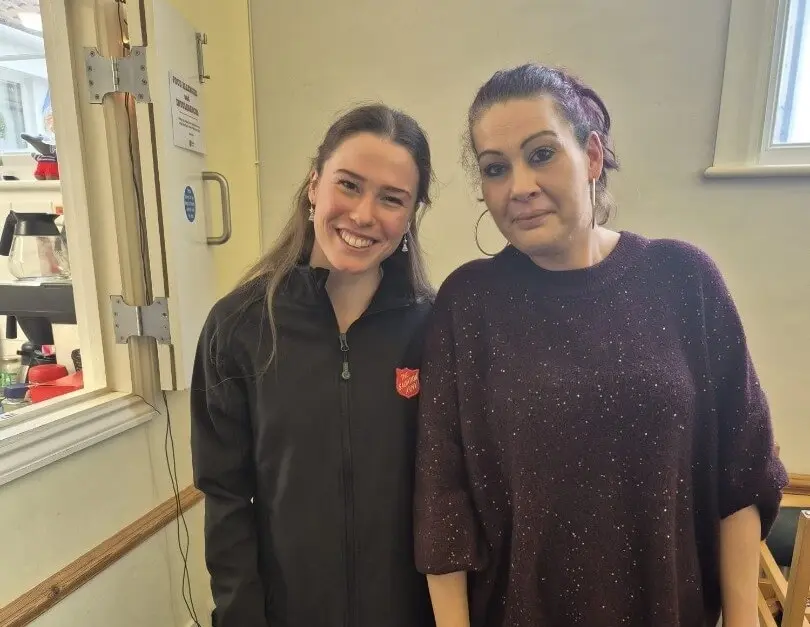
Across the UK, The Salvation Army’s network of around 600 local churches and community centres provide a range of practical support, expert advice and companionship that helps tackle social isolation. Two people who have been supported are Steve and Sarah-Jayne.
Steve, aged 58, from Bangor had suffered years of depression and anxiety, and had suicidal thoughts. He said: “Some days I would try and leave the house and maybe walk to the chemist, but I couldn’t even bring myself to go inside. If the post office was too busy, I’d just walk away and not bother collecting my money. I’d rather starve than make any kind of contact with other people. Christmas time was especially difficult, and I would basically just stay at home for two weeks. Then one of my neighbours recommended my local Salvation Army’s befriending service and with their help I’ll be spending quality time with someone on Christmas Day instead of being stuck in the house.”
Mum of two Sarah-Jayne aged 41 from Essex became isolated after being diagnosed with leukaemia but was able to turn her life around when she joined her local Salvation Army’s Toddler Group. Sarah-Jayne, who is now in remission from cancer said: “Some of my close friends didn’t really care after I came out of hospital and that sent me into a dark corner, I had to pull myself out of. It really made me feel alone. I didn’t want to go out and just stayed at home. It gave me anxiety and panic attacks. After a few weeks visiting The Salvation Army, I was asked if I wanted to be a volunteer at the toddler group and then at their weekly community lunch club. I lost the job I had before I was diagnosed but now, I’m keeping busy, I feel stronger every day.”
To find out about what activities The Salvation Army offers in your local area or to support its work please visit www.salvationarmy.org.uk

*The population of the City of Birmingham is 1.18 million. Source: Office for National Statistics (ONS), 2025a). The population of the City of Glasgow is 650 ,000. Source: National Records of Scotland (NRS), 2025).
**A survey of 4384 UK adults is weighted to be nationally representative and was carried out by YouGov on 8 to 10 December 2025 on behalf of The Salvation Army.
3.3% of survey respondents said they will spend Christmas Day alone even though they don’t want to.
The UK adult population figure is 55,022,253 and 3.3% of that is approximately 1.8 million adults. Source: ONS
*** Research published in the Journal of the Royal Society of Medicine