International Heritage Centre blog
Call the (Salvation Army) Midwife
Call the (Salvation Army) Midwife
In January 1896, Salvation Army periodicals first make mention of the organisation’s midwives working around London Fields and Cambridge Heath, the work having started in late 1894. By the time detailed statistics were produced in 1899, the number of maternity cases in all districts had already reached 2,267.
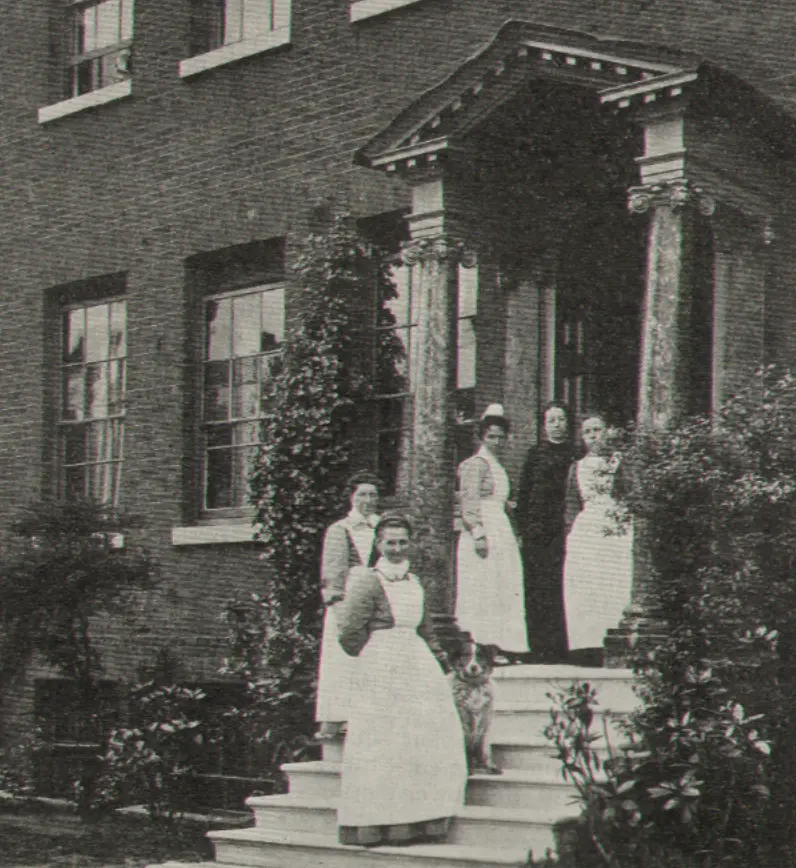
These births were mostly in the vicinity of Ivy House, The Salvation Army’s maternity hospital in Hackney, but births also took place in Upper Clapton, Hoxton and Shoreditch. A handful of births took place in Canning Town, and there were even some south of the Thames.
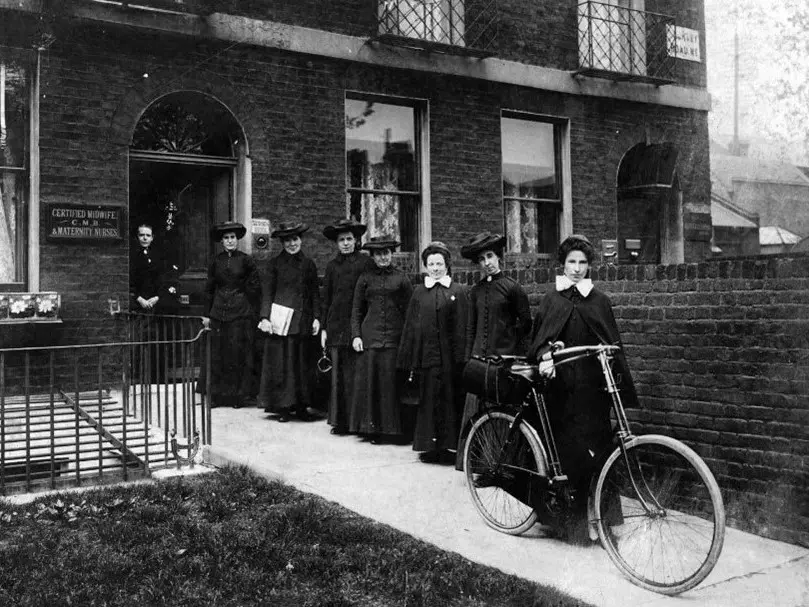
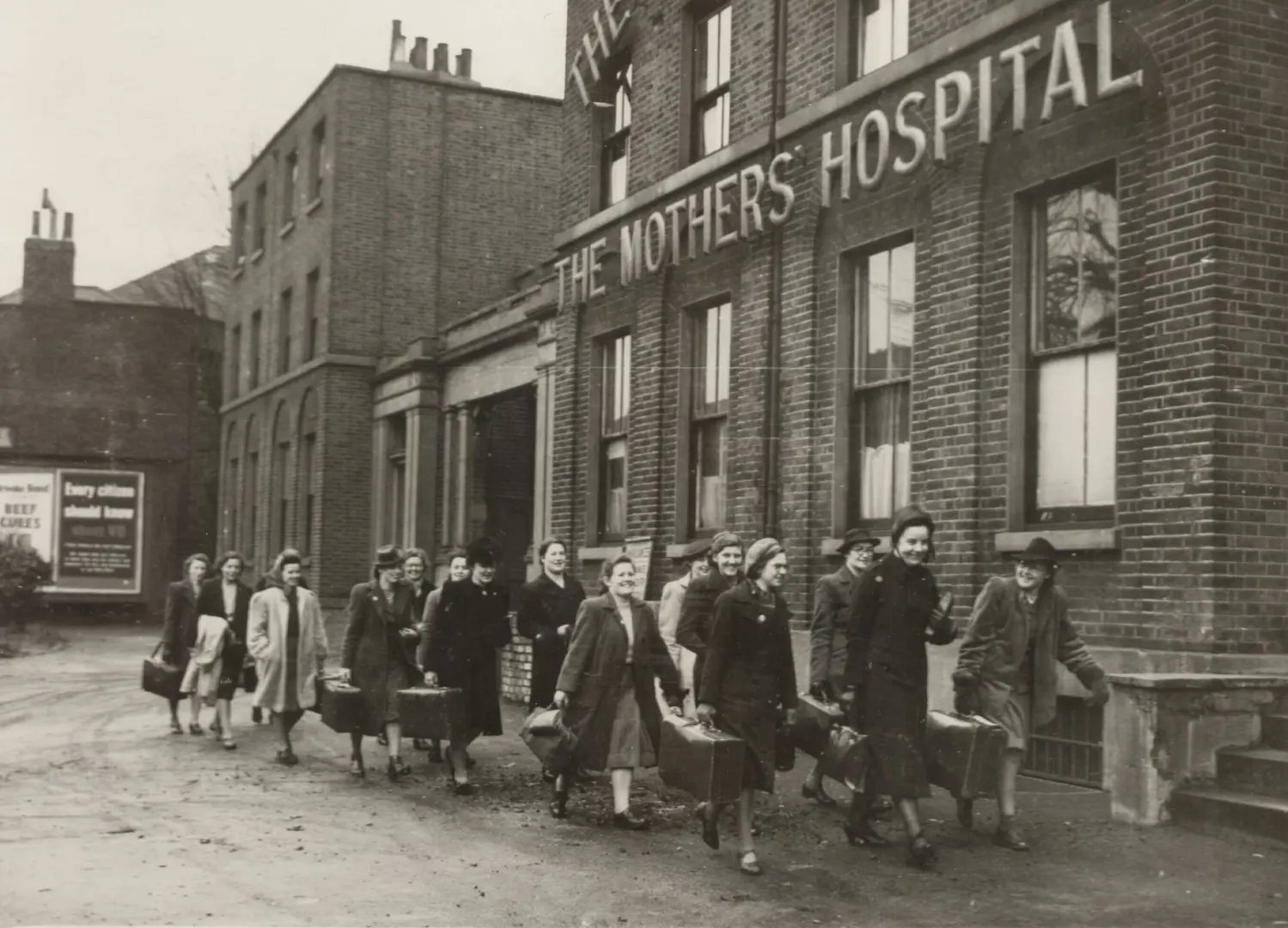
Pairs of midwives operated from houses known as ‘Maternity District Posts’, which also served as their quarters, and, as the work developed in the following decades, maternity districts were created to cover Barking, Becontree, Dagenham, Downham, Hackney Wick, Hoxton, Ilford, Romford and Shoreditch. In 1913, with the closure of Ivy House, supervision of the district work was undertaken by The Mothers’ Hospital, the Army’s new maternity hospital in Clapton.
We know from early sources that ‘ordinary cases’ were charged 7/6 or 10/-, while poor women paid either 5/- or nothing at all. An indication of the depth of poverty found in some homes is found in an account from February 1897:
‘Our nurse is now visiting a poor woman with three little children, and when the new little baby came, there was no food in the house with the exception of some oatmeal and a little tea… a kind friend gave us 7d. for coals, and nurse buys them a loaf a day’.
In an account from the previous year, we learn that the District Nurse cleaned the room and even ‘put the kids square’. She washed baby in a pudding dish, as it was the only thing to hand. And then called upon the family once a day for a fortnight. In January 1900 we read that, despite raising their charges, they still have to turn away many applications.
In 1898 there is mention of the involvement of four Salvation Army nurses in the Maidstone typhoid epidemic of 1897-1898, in which more than 130 people died. They were part of a group of nurses sent to Maidstone to help manage the epidemic. In recognition of their work, the nurses were awarded silver medals, which were presented by the Mayor of Maidstone Borough Council. Also on the list of recipients was a nurse probationer from The London Hospital, a Miss Edith Cavell.
Until quite recently we thought that general history of the work as described in newspaper reports was all we had on district midwives, along with some statistics of the work undertaken. This was until several maternity registers came to light, that had previously been miscatalogued. It was only when they were re-examined that their true nature became apparent. Five of the six volumes were in the name of ‘E. D. Goodsell’.
Eva Goodsell
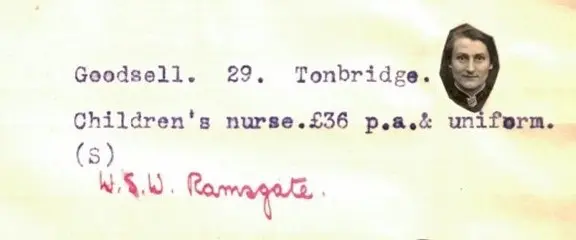
Eva Dorothy Goodsell, born in Maidstone in Kent in 1893, was the daughter of a Boot & Shoemaker and his wife. By the age of 18 she was working as a domestic servant in the household of a Congregational minister in the town. She later joined The Salvation Army in Tonbridge, and the next record we have of her is from 10 August 1922 when she entered The Salvation Army’s International Training Garrison in Clapton. After nine months training, she was commissioned (ordained) as a Salvation Army officer (minister) and appointed to The Haven, the Army’s Ramsgate children’s home.
Later in the decade, Eva undertook specialist training to become a midwife. The first of her registers in our archives gives medical details of the twenty births Eva had to attend to complete her training. Of these, 15 took place in The Mothers’ Hospital, and the last five on a district. Interestingly, one of the hospital births was to a woman from Dover, and another from Brighton, showing the distances some women would travel to reach the hospital of their choice.
She was registered as a midwife on 23 November 1929, and The Midwives Roll shows her residing at The Crossley Hospital, the Salvation Army maternity hospital in Manchester, after her registration. It may have been that this was an extension of her training. By December 1930 Eva was back in London, as shown in her second maternity register. Her registers document 1,127 cases she attended as a Salvation Army midwife in London between 1929 and 1942. Eva’s register entries confirm that ‘ten days’ thorough nursing’ was the typical length of time after the birth that she continued to visit the mother.
Eva was ‘promoted to Glory’, the Salvation Army term used when a Salvationist dies, on 11 July 1979, back in her hometown of Maidstone.
A Salvation Army midwife's rounds mapped
Analysing Eva's career as documented in her four post-training registers, the cases fall neatly into five periods, as shown by the maps and descriptions below. Map 1 shows the first two districts that Eva served in. Maps 2 to 5 show the new cases for each successive period, with earlier cases shown but greyed out. Finally, map 6 plots all of her cases.
Map 1
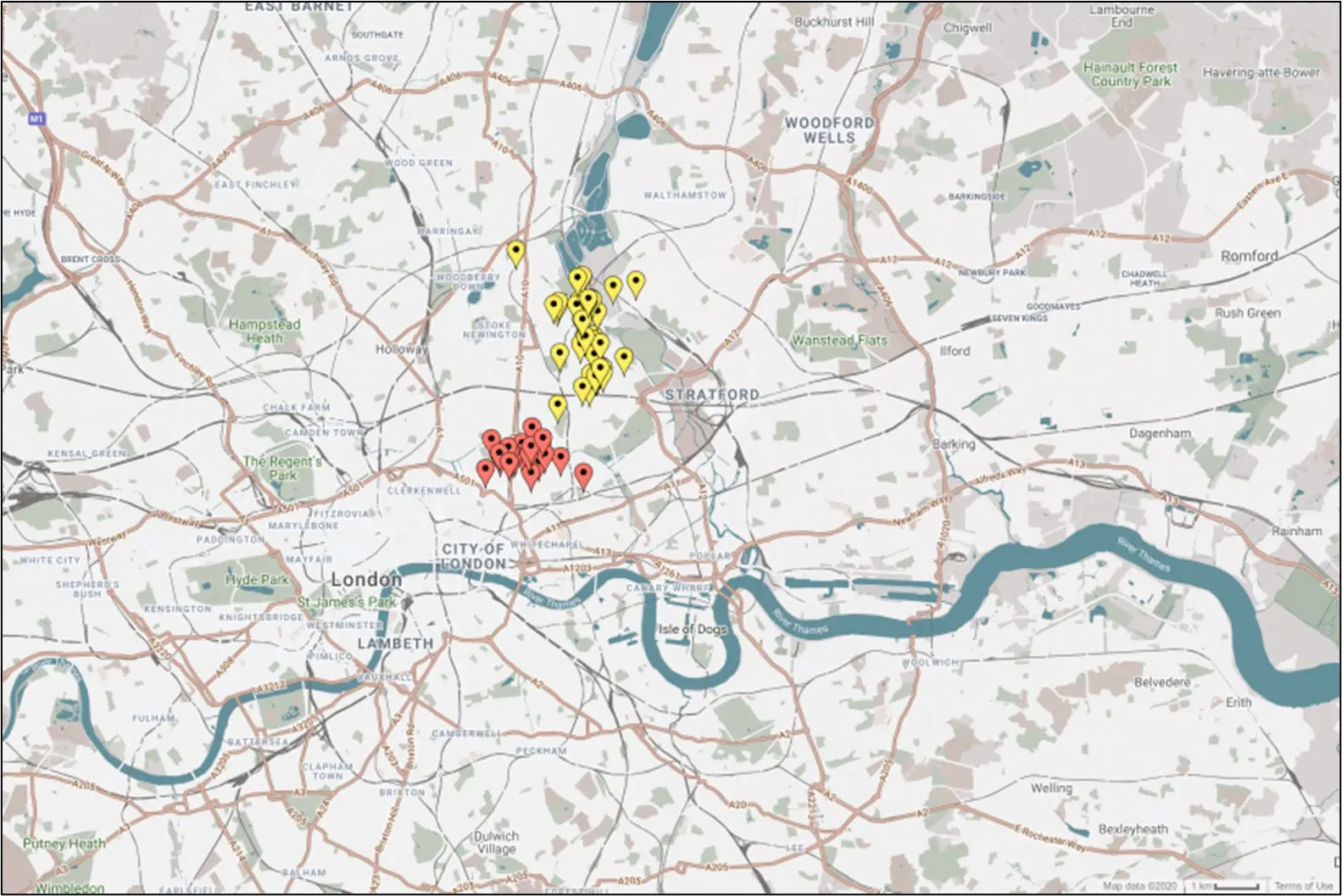
11/12/1930 to 11/09/1931 (68 cases)
On her return from Manchester’s Crossley Hospital, Eva started work on the Clapton District (although the register is confusingly labelled ‘Hackney Road District’) on 11th December 1930. Over the next four months she delivered 27 babies. The register for this period gives very little extra detail, other than the fact that she had to call a doctor in on one occasion, reason unspecified.
Following a gap of just over a month, entries start to appear for the Hackney Road District, with a birth to a woman in Maidstone Street, one of many streets in the area ‘redeveloped away’ in the 1960s. The section where this house stood now lies under Haggerston Park.
This was the first of 15 births in three weeks, before Eva swapped back to Clapton District for just five births. This pattern continued with her returning to Clapton and then again to Hackney Road. During this period, she had to call a doctor on five more occasions, two of which resulted in the baby being hospitalised, one with spina bifida.
It’s not clear what lay behind these back-and-forth assignments; it could have been related to Eva’s continuing training during this period, or it might simply reflect a shortage of personnel, leading to individual midwives having to be more flexible than usual. Certainly, we know from our study of later periods that this was the only part of Eva’s service which saw such upheaval. During this period Eva delivered a total of 68 babies.
Map 2
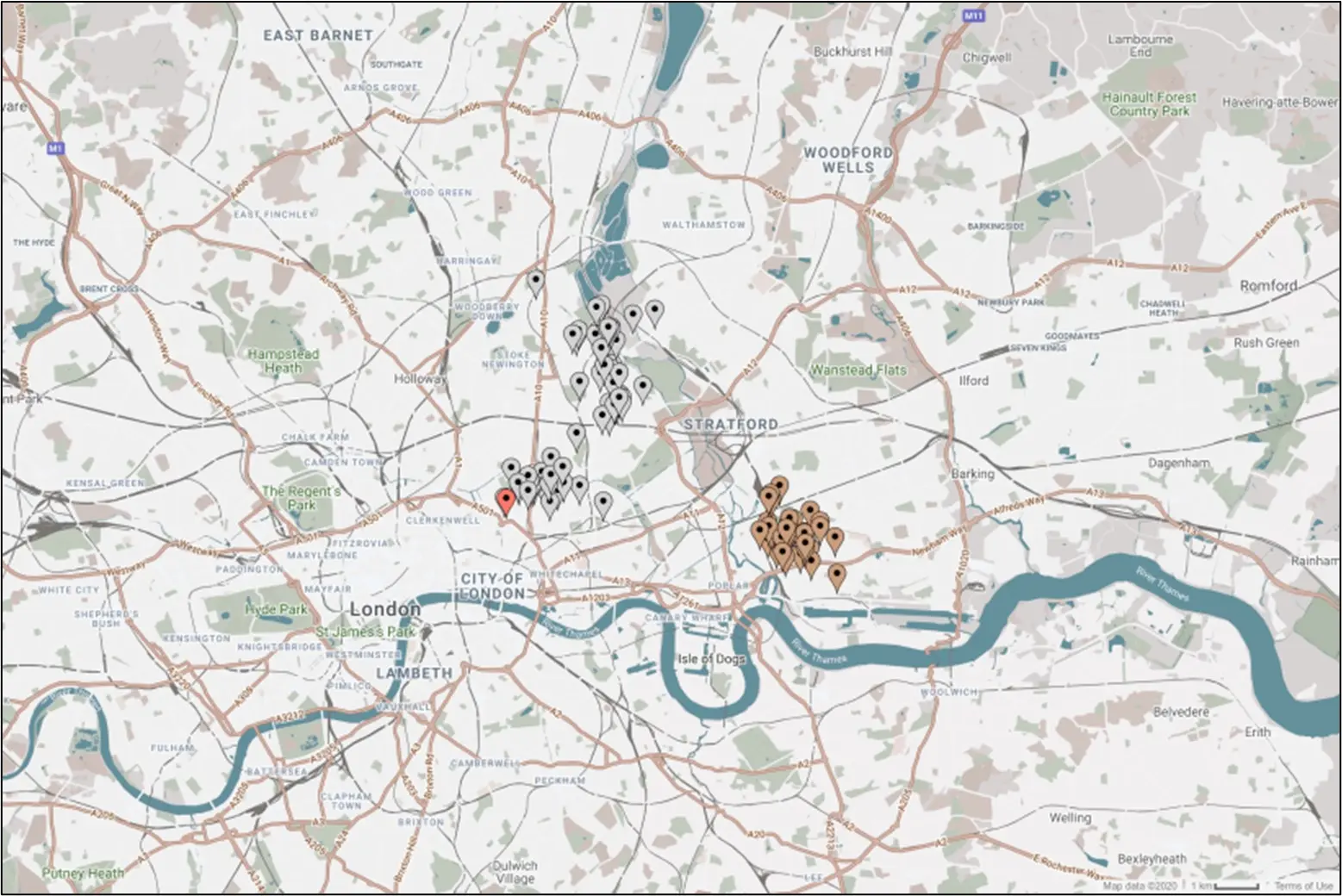
22/09/1931 to 21/02/1932 (45 cases)
For five months starting on 22nd August 1931 Eva moved to the Canning Town District, with just a single case registered in the Hackney Road District. There is a little more detail given on some of these cases. For example, we see her first recorded cases of a second nurse being called in to assist. Taken over her whole career, we see Eva requiring the services of a second nurse in 10% of cases (twice a third nurse was needed) and a doctor in 5%. In a small number of cases Eva is shown to be on ‘nursing only’, assisting another midwife.
Map 3
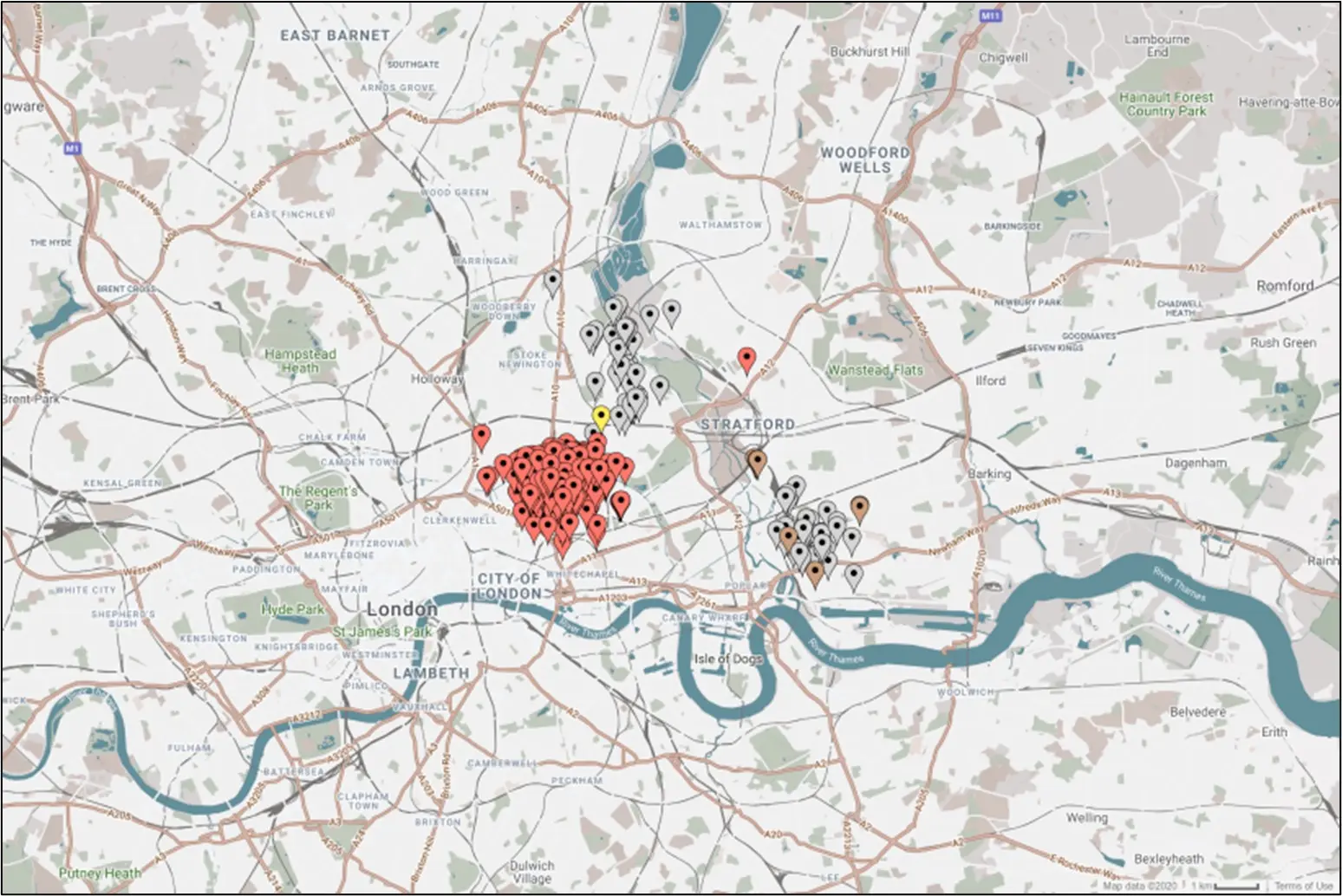
24/02/1932 to 14/11/1934 (372 cases)
Next followed a period of greater stability, with Eva being settled in the Hackney Road District for more than two-and-a-half years. Of the 372 cases recorded during this period, just a handful were outside the district. It’s during this period that she delivers a baby for a woman in Maidstone Street, the same woman as one of her earliest cases on the Hackney Road District, back in 1931.
Map 4
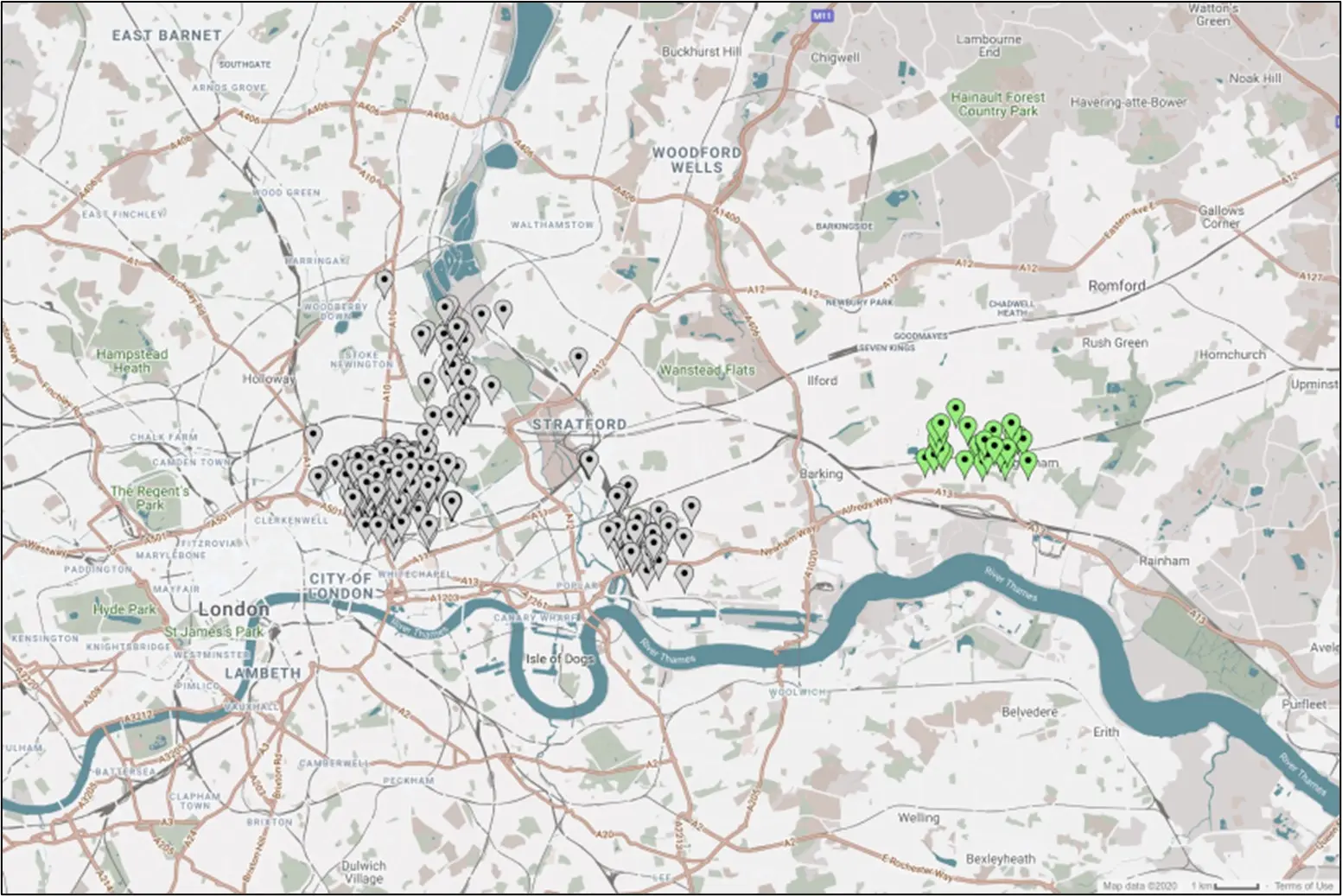
16/11/1934 to 11/02/1935 (35 cases)
The fourth period in Eva’s service reflects a time of social change in the east of London. In the 1920s, London County Council had begun building the vast Becontree estate in Dagenham, and as a result the population of Dagenham went from 9,127 in 1921 to 89,362 in 1931. This paved the way for a large movement of people from east London into Essex, The Salvation Army opened several new Maternity District Posts in Essex, starting with Becontree in 1927.
Map 5
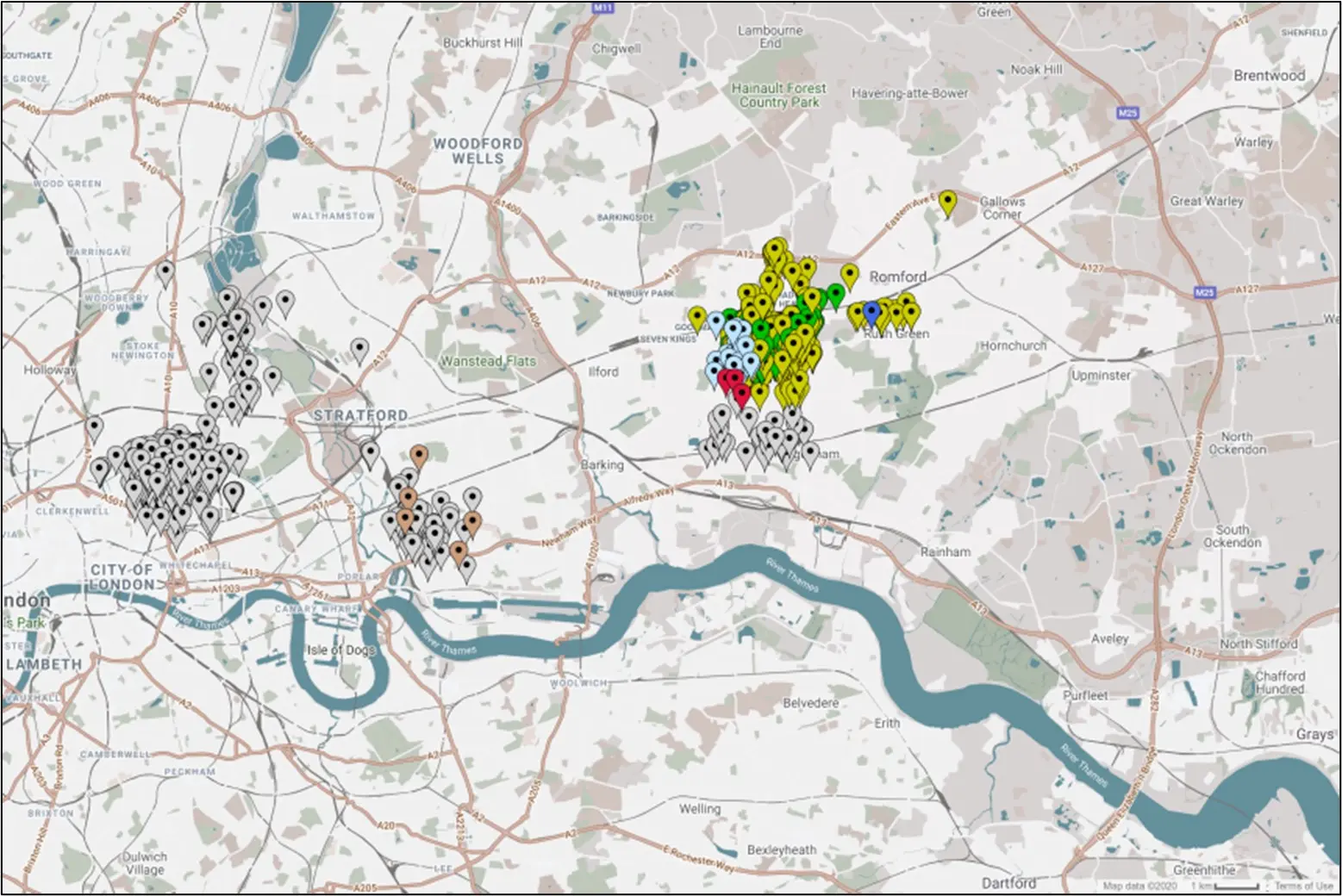
22/02/1935 to 13/01/1942 (606 cases)
This last period marked the beginning of a very settled phase for Eva. She was appointed to Becontree District, to a house in Green Lane, which had been the Maternity District Post since 1929. She was to remain there for the next seven years. It’s interesting to note their neighbours on Green Lane included several railway workers, as well as a clerk, a shop assistant, a jewellery worker and a police constable.
Up until February 1940 Eva was one of the midwives living and working in the Becontree District. During this time, she also delivered 35 babies on the Ilford District, as well as a handful in Canning Town, Barking and Romford, as shown in Map 5. During this period one other birth took place which was a long way from Eva’s district; in July 1936 in the town of Downham, near Bromley in south London. This was not simply a case of helping out in an adjacent district, and it’s not clear why she would have travelled so far outside her own district for this single birth.
Map 6
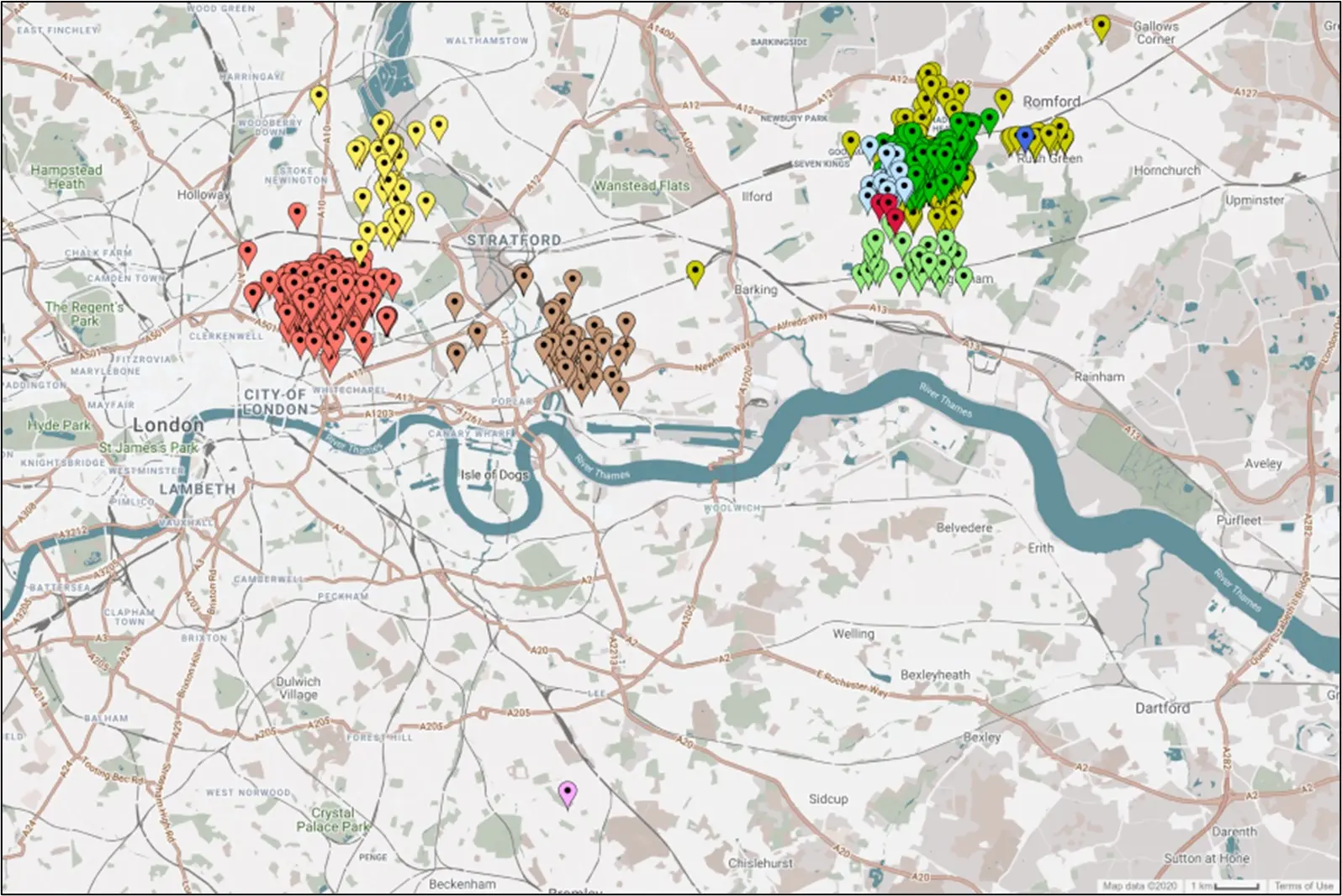
Of all Eva’s 1,127 cases, just 17 (<2%) of these could not be plotted on the maps above. In some cases, this was because the address given in the register was too sketchy, and sometimes because of the destruction of whole streets due to slum-clearances, bombing during the Second World War and post-war re-development. Other addresses were simply unconventional, such as the ‘bungalow shanty town’ which had grown up around Lea Bridge Station. This was demolished in the 1930s, but not before Eva had delivered a baby to a woman who lived there.
Daily life for a Salvation Army midwife
So what was daily life like for a Salvation Army midwife? An article published in 1947 looks at the work of Captain Nurse Muriel Malcolm, one of the midwives stationed at the Ilford District Maternity Post. Twenty years later, as Brigadier Malcolm, she was to become the Matron of The Mothers’ Hospital in Clapton. The article states that as well as ‘her own booked cases the Salvation Army nurse is on call for any emergency in her area, at any hour of the night or day.’ The midwife's routine is summarised as follows:
Morning Routine:
- Prayers
- Housework finished
- Dinner on the way
- Nurses out on rounds by 9am
Rounds:
- Mothers attended to and babies bathed
- Others instructed on correct way of caring for baby
- Many other things are discussed including:
- Household management
- Rations
- Religion
- Cleanliness
- Counselling and prayer
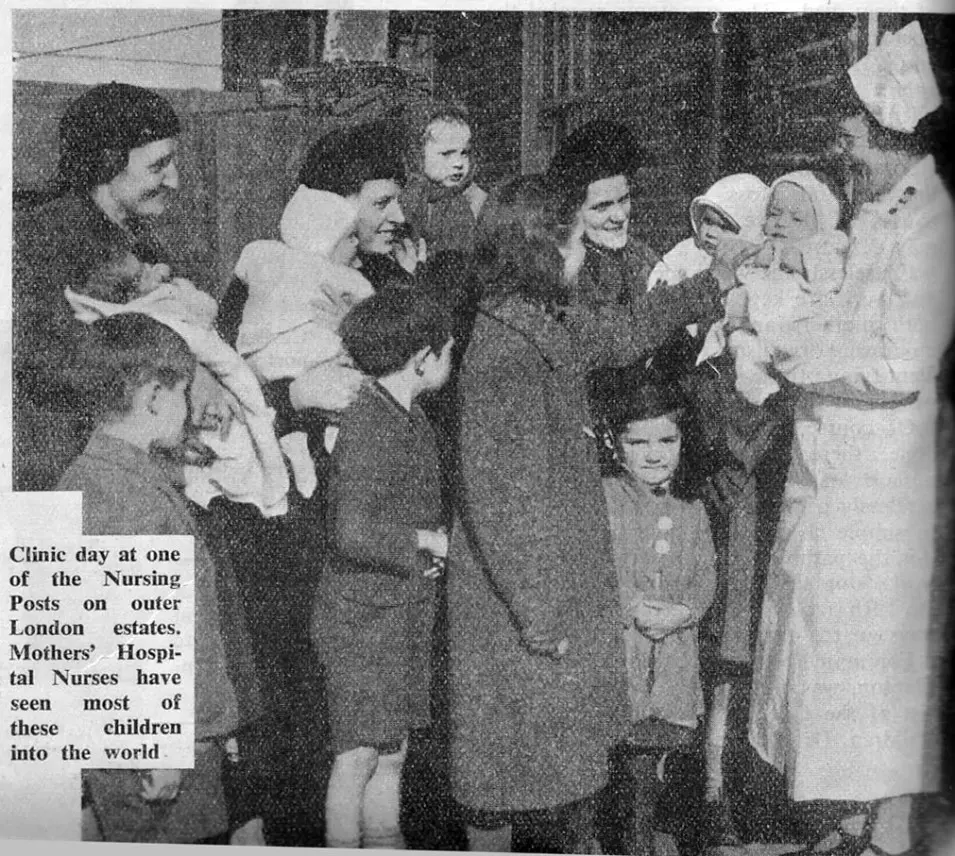
For first few days patients were visited twice a day. Every patient on the books had at least three home visits before the birth of the baby, and afterwards went 12-14 times to the ante‑natal clinic, held one afternoon a week. As well as visits and clinics there were other calls to make. Every patient was commended to God in prayer before the midwife left the house.
Historical Endings
By the closure of the last district at the end of 1970, more than 70,000 babies had been delivered by Salvation Army district midwives working in women’s own homes. Including Ivy House and Mothers’ Hospital births for the period 1889 to 1986, the total was over 182,000 births.
Kevin
September 2025
Read other blogs from the Heritage Centre
The Empress of Ireland
Many Salvationists lost their lives in the worst peacetime maritime disaster in Canadian history
The Life Saving Organisations
The Salvation Army has been linked with Boy Scouts and Girl Guides from the early days of Lord Robert Baden-Powell’s initiative.
The Navy and the Navvy: Wales 150th anniversary
2024 was the 150th anniversary of The Salvation Army in Wales. Here's how we celebrated...
‘A constant and outspoken friend’: Frances Willard and Catherine Booth-Clibborn
In our archives, we hold a series of letters relating to Frances Willard, the president of World’s Woman's Christian Temperance Union